Lila and Charity

Divine Playfulness and the Joy of Pure Love
There exists a stunning convergence between the Hindu concept of Lila—divine play—and the Christian principle of Charity, the pure love of Christ. Though separated by oceans and theological traditions, both point toward the same transcendent truth: the highest form of love flows not from obligation or need, but from overflowing abundance.
When Sacred Play Meets Perfect Love
The highest form of love does not arise from obligation or lack, but from overflowing abundance.
Lila and Charity are not merely parallel metaphors. They describe the same reality viewed from different angles: Light and Truth in joyful motion. When divine fullness overflows, it does not strain or calculate—it plays. Joy is not a reward deferred to the end of righteousness; it is the immediate brightness that appears when love moves freely.
Divine playfulness is not trivial, nor is it metaphorical. It is the natural behavior of Light and Truth when unconstrained by fear, scarcity, or ego. God does not play because something is missing. God plays because fullness overflows.
The Counterfeits of Joy: Anti-Play
Before we can understand true joy, we must recognize its counterfeits.
As Gene R. Cook observed, the adversary sows false seeds of happiness through the pursuit of wealth, power, position, and indulgence. These mimic joy the way a photograph mimics presence—capturing form without life.
The adversary’s aim is misery, and misery seeks company not merely for comfort but for validation. Scripture names this clearly:
And because he [Satan] had fallen from heaven, and had become miserable forever, he sought also the misery of all mankind. . .
. . . for he seeketh that all men might be miserable like unto himself.
[2 Nephi 2:18, 27]
What unites all counterfeit joys is this: they interrupt circulation.
Egoic Power hoards.
Unhealthy Pleasure consumes.
Pride isolates.
None of them play—they clutch.
They operate on scarcity, requiring constant acquisition to maintain the illusion of satisfaction. They dam what was meant to flow, attempting to possess what was designed to circulate. The result is spiritual entropy: stagnation where there should have been light.
True joy behaves differently. It multiplies as it moves. It brightens in the sharing. It expands through circulation.
Joy as Brightness
Joy, in its deepest sense, is not merely an emotion. It is brightness.
To have joy is to be filled with Light and Truth until the soul shines. Joy is intelligence becoming luminous—Light received, held, and then allowed to move again.
This is why scripture does not say that joy is optional or incidental. It declares purpose: “Men are that they might have joy” (2 Nephi 2:25). Not happiness in isolated moments, but joy as the fundamental aim of existence.
Emotion itself means energy in motion. The highest emotion—joy—is Light moving freely through a willing soul.
The soul was not designed as a vault, but as a conduit and vessel.
“Men are that they might have joy” (2 Nephi 2:25)
That’s why “men are that they might have joy” doesn’t read like a Hallmark slogan. It reads like a prime directive.
Joy isn’t just “feeling good.”
Joy is the soul becoming brighter.
So what does that have to do with play?
Everything.
Because play is Light in motion—love moving without fear, without calculation, without the stiffness of self-protection.
Lila: Love as Creative Expression
In Hindu philosophy, Lila describes the universe as God’s playful, spontaneous creation—not born from necessity, but from creative delight.
An artist paints because beauty demands expression.
A child builds knowing the tide will come.
A musician improvises because the melody cannot remain still.
This is Lila: action arising from fullness rather than lack.
In divine terms, play is not randomness. It is unforced order. Just as Light naturally fills space unless constrained, creation itself is the visible joy of divine intelligence breathing Light into form.
The universe exists because God delights.
Charity: The Pure Love of Christ
Charity, the Book of Mormon teaches, is “the pure love of Christ” (Moroni 7:47).

It is not transactional love—I love you if you love me back.
It is not need-based love—I love you because you complete me.
It is love that flows from fullness, seeking nothing in return.
Like Lila, charity is generative rather than extractive. It gives because giving is its nature, just as light shines and water flows downward.
Charity is not careless; it can be effortless. Like a master musician improvising within perfect form, charity obeys divine law so fully that obedience feels like freedom. The commandments become choreography rather than constraint.
Bounds and conditions do not restrict joy. They give the dance its shape.
“the pure love of Christ” (Moroni 7:47).
Play as the Physics of Joy
Here is the unifying insight:
Play is the emotional signature of charity.
Charity is love that circulates freely.
Joy is what happens when Light moves without resistance.
Joy does not come merely from acquiring more Light, ...
but from letting Light move.
This is why the adversary’s counterfeits ultimately fail. Power tries to capture Light. Unhealthy Pleasure tries to consume it. Pride tries to corner it. But Light cannot be owned. It can only be shared—and in sharing, it multiplies.
The Long View: Joy Versus Pleasure
True joy is not found in the short run.
Scripture teaches, “In this world your joy is not full, but in me your joy is full” (D&C 101:36). Joy is cumulative brightness, gathered over time.
Cook once taught his sons this lesson after shoveling snow. When one suggested telling the neighbor immediately—seeking recognition—Cook invited them into a deeper joy: anonymous service. They shoveled three walks that morning and learned that lasting joy comes not from being seen, but from letting love move freely.
Pleasure burns hot and fades.
Joy deepens and endures.
The countenance becomes a record of choices—each act of charity adding Light, each moment of sacred play increasing brightness.
in this world your joy is not full, but in me your joy is full.
(D&C 101:36)
The Sacred Intersection
When Lila and Charity converge in a person, something remarkable appears:
- Service without martyrdom
- Compassion without heaviness
- Seriousness without rigidity
- Holiness without stiffness
These people do not serve from guilt. They serve from overflow.
Their goodness appears effortless—not because it is easy, but because it flows from who they are becoming rather than what they are trying to earn.
They have become conduits rather than merely containers.
The Woman at Jesus’s Feet: Love That Plays
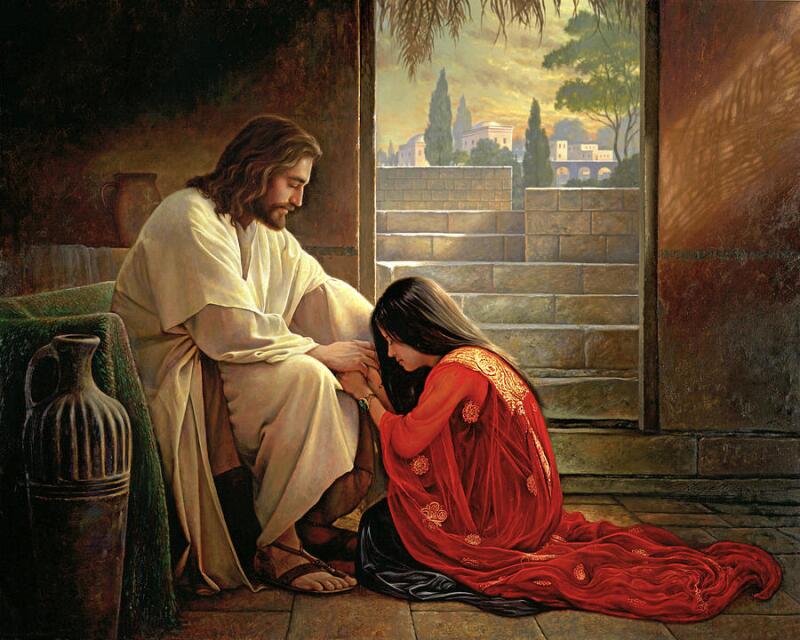
Forgiven, by Greg Olsen. Available at gregolsen.com.
In Luke 7, a woman enters a room governed by calculation and does something that looks absurd.
She weeps.
She washes Jesus’s feet with tears.
She dries them with her hair.
She kisses them.
She anoints them with costly ointment.
The host is scandalized. The gesture looks wasteful.
But measured minds do not recognize unmeasured love.
This is where sacred play becomes visible.
Why Her Love Is Divine Playfulness
1) She is unselfconscious.
Like a child who forgets the audience exists, she is fully present to the Beloved.
2) She is extravagant.
Not because she’s trying to impress, but because love in abundance overflows.
3) She is creatively expressive.
Tears, hair, perfume—she uses what she has. Love becomes art.
4) She loves for love’s sake.
Jesus makes clear she isn’t buying forgiveness; she is responding to it. She is not paying. She is playing—sacredly, freely, fully.
5) She is immune to judgment.
Because when you’re inside divine joy, the opinions of those outside the dance lose their authority.
Jesus defends her, not as “acceptable,” but as true.
Her love is the evidence that she has already encountered something bigger than shame.
And that’s the scandal of grace:
grace doesn’t make people sterile—
it makes them luminous.
Jesus declares, “Her sins, which are many, are forgiven;
for she loved much” (Luke 7:47).
She is not buying forgiveness. She is responding to it.
She is unselfconscious, extravagant, creative, free from judgment.
Her love looks wasteful only if love is scarce. In the economy of Light, circulation multiplies brightness. Of course I'm sure there's more symbolism to the act of washing Jesus' feet, but what about this simple perspective of her expressing her heart and joy.
She becomes what she gives.
The Paradox of Unmeasured Love

Divine love often appears inefficient.
The ointment is wasted.
Grace is wasted on sinners.
Beauty blooms unseen.
But excess is the signature of Heaven.
Measured love is human.
Unmeasured love is divine.
But apparent waste is often the signature of Heaven.
Flowers bloom where no one will photograph them.
Stars shine on oceans that won’t clap.
God pours mercy on sinners who can’t repay.
Only love that gives beyond necessity carries the unmistakable mark of the sacred.
The devil offers efficiency: maximum pleasure for minimum cost.
God offers abundance: immeasurable joy through complete self-offering.
The adversary offers mere mortal efficiency. God offers eternal abundance.
Living the Convergence
Those who live at the intersection of Lila and Charity:
- Serve without keeping score
- Love without needing reciprocation
- Give from fullness rather than emptiness
- Hold sacred work with lightness
- Take love seriously and themselves lightly
They let Light flow.
To be Full of Joy
Have you picked up on the pattern by now?
To be full of joy is to be filled with light and truth—and to be pure is to become so clear and transparent that light can shine through you: into you, and back out again, like a holy breath. The “impurities” we repent of—what we purge from heart, might, mind, body, and countenance—are simply the things that cloud the lens, leaving us to “see through a glass, darkly” (1 Corinthians 13:12).
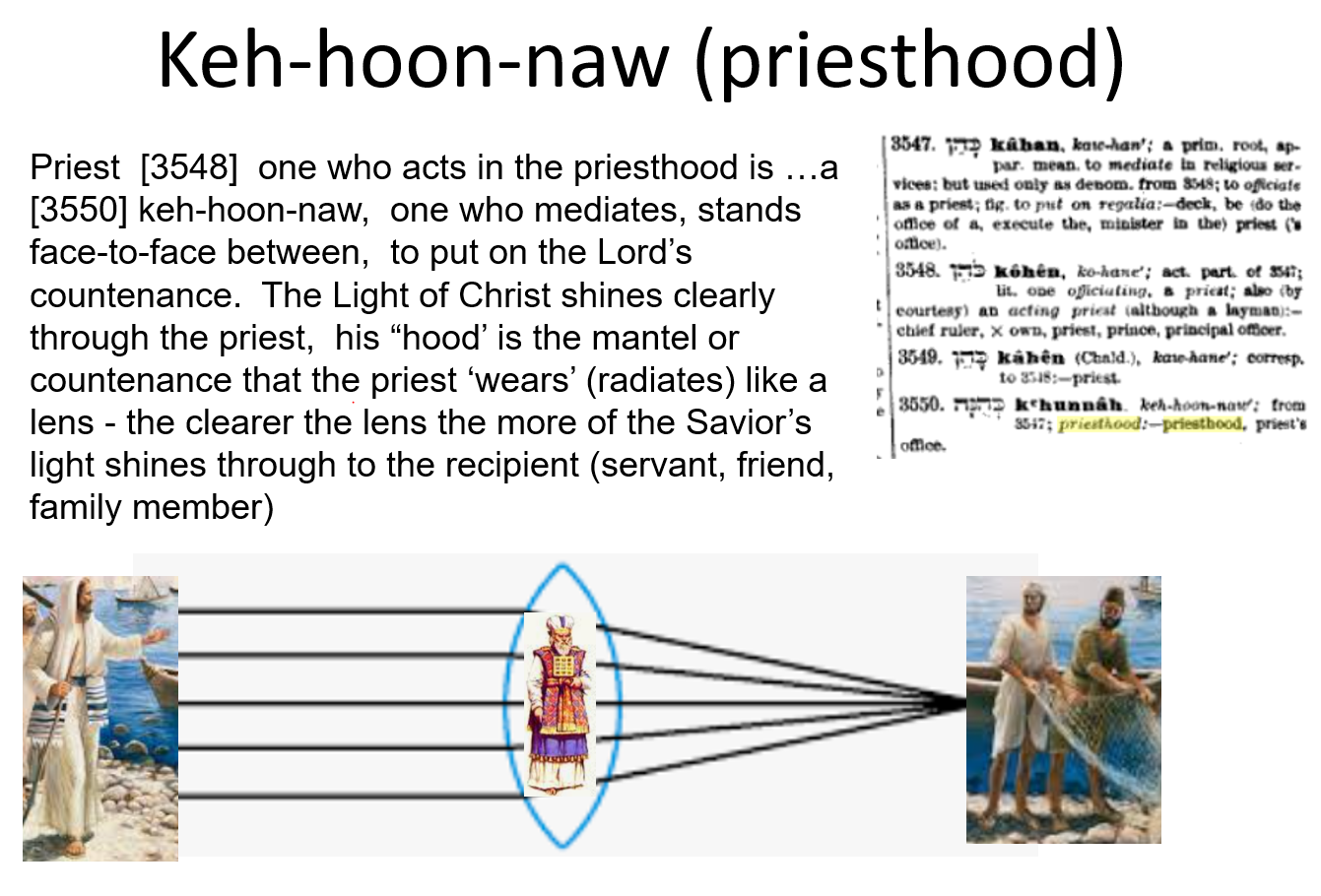
What if sometimes we overcomplicate something, that was meant to be lived and expressed, more than "thought about"?
Therefore, whoso ... cometh unto me as a little child, him will I receive, for of such is the kingdom of God....
3 Nephi 9:22
The Invitation
The woman at Jesus’s feet understood what mystics and saints across traditions have known: when you encounter divine love, the only authentic response is to play in its presence—to love extravagantly, creatively, without calculating return.
This is the invitation of Lila and Charity.
Live from abundance.
Let love circulate.
Choose the long run.
God is joyful because God is full of Light.
We are joyful when we let that Light move.
Play is what love looks like when it is no longer afraid.
This is Lila.
This is Charity.
This is the life we were created for.
 Gene R. Cook
"And now abideth faith, hope, charity, these three; but the greatest of these is charity." (1 Corinthians 13:13)

Member discussion